

If you’re wondering, "How do I keep pigeons away?" or "How do I scare pigeons away?", you're not alone. Pigeons can be a persistent issue, causing damage to properties and posing health risks for both humans and livestock. This guide outlines the most effective ways and best bird deterrents to remove pigeons from your space, be it a balcony, rooftop, poultry farm, warehouse, or barn, helping you to restore a clean and bird-free environment.
18 Most Effective Ways to Get Rid of Pigeons
Effective pigeon control methods rely on addressing what pigeons hate and minimizing what attracts them, such as food sources. The main principle is simple: reduce their rewards and increase their discomfort. When pigeons cannot find food, shelter, or safe landing spots, and when the environment feels unpleasant or unsafe, they naturally move elsewhere. Here are some useful means for keeping pigeons out of your sight:
Culling and Population Reduction
These methods aim to reduce pigeon numbers directly. They work quickly but are often restricted by local wildlife laws and public safety rules. Because many pigeons breed year-round, population reduction only works when combined with long-term prevention. Use with caution and check regulations before applying.
Shooting
Shooting can remove pigeons quickly, but it’s generally illegal or heavily regulated in cities or residential neighborhoods in many countries due to animal welfare. It requires trained professionals, controlled conditions, and official approval to ensure public safety. Because of the risks to people, pets, and other wildlife, most areas strongly discourage this method.
- Pros: Immediate results, effective in controlled rural areas
- Cons: Often illegal, unsafe in cities, and not humane
Trapping
Trapping involves using baited cages or funnel-style traps to capture pigeons safely and humanely. It’s important to check the traps often and follow local guidelines on relocation or proper handling. Just keep in mind that pigeons may return if the area still offers easy food and cozy shelter, so pairing trapping with broader cleanup efforts works best.
- Pros: Selective, controlled removal
- Cons: Requires permits, time-consuming, and not a permanent solution
Poisoning
Poison bait can be used to control pigeon numbers, but it carries serious risks for pets, protected birds, and the environment. Many countries heavily restrict or completely ban these products. Even where it’s legal, poisoned birds may collapse in public areas, creating sanitation and ethical concerns, so this method is rarely recommended.
- Pros: Fast population impact
- Cons: Often illegal, harmful to non-target animals, and poor public perception
Real Raptors
Falconers use trained hawks or falcons to scare pigeons away or remove them directly. The predator’s presence teaches pigeons to avoid the area, and repeated flights can condition them to stay away over time. However, this approach requires professionals and can be costly.
- Pros: Natural deterrent, highly effective
- Cons: Expensive, requires trained handlers, temporary effect
Birth Control
Nicarbazin-based contraceptives lower hatch rates and gradually reduce pigeon populations over time. They require daily monitoring at feeding stations to ensure consistent dosing. This method works well for long-term population control, especially in places where lethal options are limited or prohibited.
- Pros: Humane, steady population decline
- Cons: Needs regular maintenance, slower results
Habitat and Resource Management
This principle focuses on removing what attracts pigeons in the first place. When food, water, and nesting locations disappear, pigeons move elsewhere naturally. It is one of the simplest and most cost-effective foundations of pigeon control.
Nest Removal
Removing nests disrupts breeding and prevents new squabs from hatching. You must check legal requirements, as some areas regulate nest removal. Repeat the process regularly, as pigeons rebuild quickly.
- Pros: Reduces future population, low cost
- Cons: Requires frequent checks, may need permits
Food Resource Removal
Clean up food scraps, secure trash bins, and prevent intentional feeding. Pigeons rely heavily on easily accessible meals, so removing food quickly reduces flock size. Routine monitoring is essential; even a small lapse can let pigeons sneak back in.
- Pros: Free, simple, effective foundation
- Cons: Requires frequent checks
Tree Pruning
Pruning branches removes sheltered roosting and nesting spots that pigeons look for. Trees that are open and airy become much less attractive for birds to settle in. For the best long-term results, pair regular trimming with proper waste cleanup so pigeons have fewer reasons to return.
- Pros: Long-lasting, improves overall sanitation
- Cons: Requires periodic maintenance
Physical Barriers and Exclusion
The means in this category prevent pigeons from physically entering or landing on surfaces. When birds cannot access an area, they naturally move away. It is one of the most reliable long-term strategies.
Block the Entries
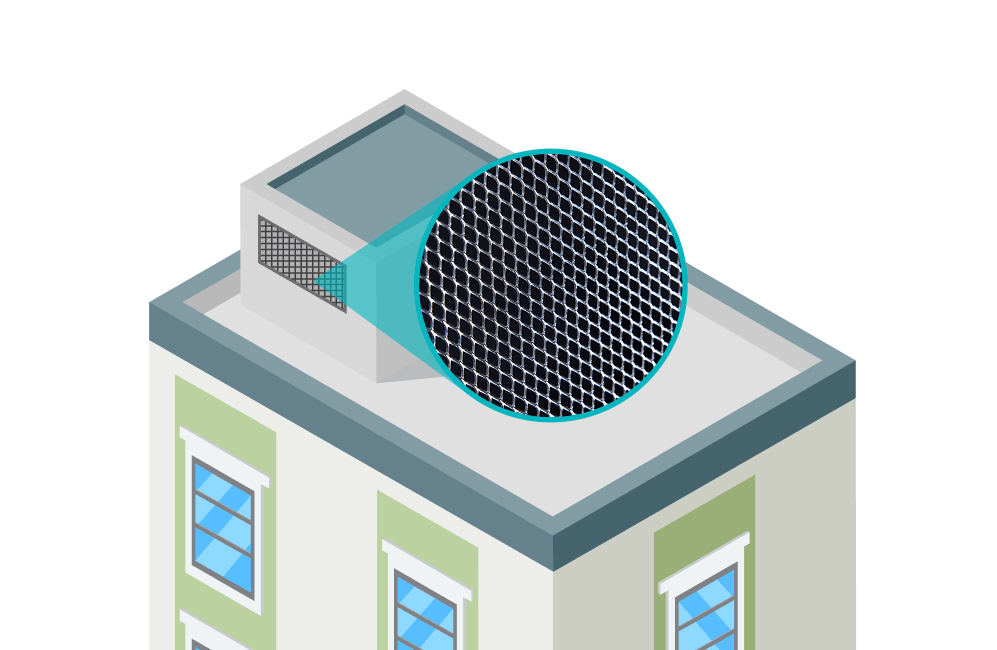
Seal openings with mesh, metal strips, or screens to stop pigeons from roosting or nesting indoors or on ledges. Check vents, gaps, doorways, and roof edges regularly. This method is essential in attics, warehouses, and barns, but it does need regular inspection and maintenance to block entry points.
- Pros: Humane, very effective
- Cons: Requires time and ongoing inspection
Bird Netting
Install tight and durable netting over balconies, rooftops, or warehouse openings to keep pigeons out of restricted areas. When the netting is properly tensioned and secured, birds cannot enter or perch behind it. Make sure to inspect the net regularly for holes, sagging, or loose edges, since even a small gap can quickly reduce its effectiveness.
- Pros: Long-lasting, ideal for large areas
- Cons: Installation takes effort, needs maintenance
Bird Gels

Bird-proof gels create an uncomfortable, sticky surface that discourages birds from landing. These non-toxic gels are easily applied to ledges, windowsills, and rooftops, forcing birds to seek more stable areas. Regular reapplication is necessary in high-traffic or outdoor environments where the weather may wear it away.
- Pros: Low cost, easy to use
- Cons: Needs reapplication, may collect dust
Bird Spikes

Bird spikes prevent pigeons and other birds from landing on surfaces by creating an uneven, unwelcoming surface. They’re ideal for rooftops, ledges, and eaves where birds frequently perch. While effective and humane, spikes may alter the building's appearance and require precise installation to prevent birds from finding perching spots around gaps.
- Pros: Durable, non-lethal
- Cons: May affect the appearance of buildings
Electric Bird Deterrent
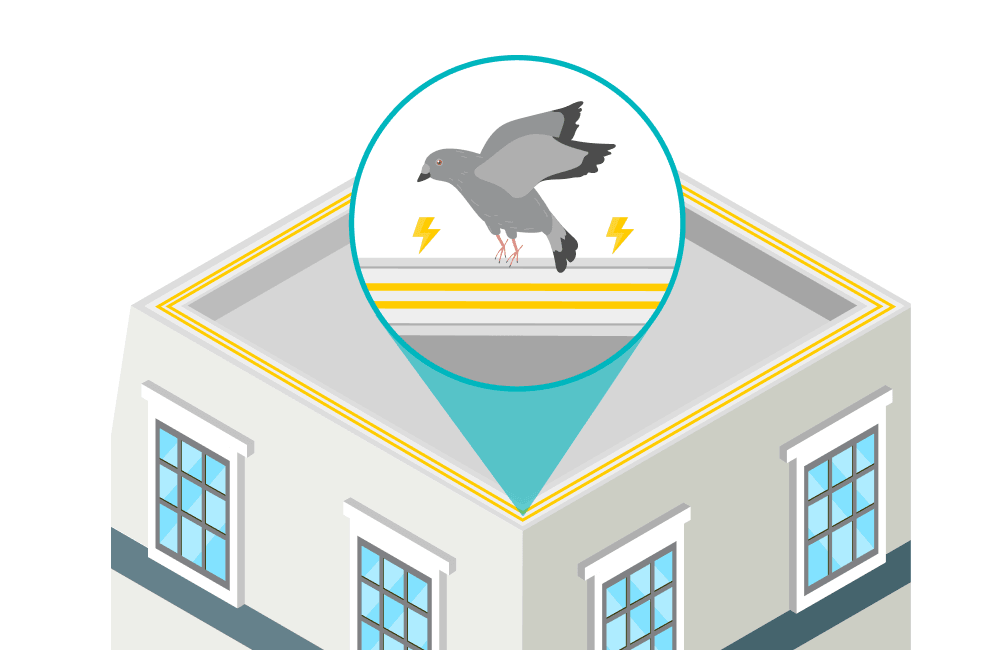
Electric strips deliver a mild, harmless shock when birds land, teaching them to avoid specific areas. This method is highly effective in high-traffic areas but requires a power source and careful setup to ensure consistent operation. While it deters pigeons and other birds without causing injury, it can be costlier and may need periodic checks.
- Pros: Highly effective, discreet
- Cons: Higher cost, needs power, and periodic checks
Sensory Deterrents
These methods make the environment uncomfortable by affecting sight, sound, touch, or smell. They do not harm pigeons but encourage them to leave. They work best when combined with habitat management or exclusion.
Bird Repellents
Repellent sprays or granules use strong scents or tastes to discourage pigeons from landing or staying in an area. Natural options made with pepper or essential oils are especially useful in gardens and small outdoor spaces. Since the effect fades over time, you need to reapply the repellent frequently, especially after rain or cleaning.
- Pros: Eco-friendly, safe for most areas
- Cons: Short duration, needs frequent use
Fogs and Vapors
Methyl anthranilate foggers release a grape-scented compound that irritates pigeons’ sensory receptors and encourages them to leave. Automated fogging systems are useful for covering large areas such as warehouses, stadiums, or loading bays. For consistent effectiveness, the system needs to run regularly so pigeons do not return.
- Pros: Covers wide areas, humane
- Cons: Needs equipment and ongoing operation
Visual Deterrent

Visual deterrents, such as reflective tape, predator decoys, or scarecrows, create a threat that discourages birds from approaching. These are easy to set up, affordable, and suitable for outdoor areas. However, birds can quickly adapt if these deterrents remain static, so rotating their position can help prolong effectiveness.
- Pros: Affordable, fast setup
- Cons: Birds may get used to them
Sound Deterrent
Sound devices that emit distress or predator calls are effective for covering large areas, as they trigger birds' instinctual response to danger. However, pigeons may become used to the sounds, so periodic adjustments are recommended. Note that sound deterrents are unsuitable for poultry houses, where the noise could stress livestock.
- Pros: Covers large spaces
- Cons: Noisy, birds may habituate
Laser

Laser deterrents disorient birds with moving beams of light, which birds perceive as a threat. Lasers are highly effective for large, open spaces and warehouses, particularly when automated for constant activity. They are costlier than other methods but require little maintenance. To maximize their effectiveness, change laser patterns periodically, as birds can eventually adapt to repetitive motions.
- Pros: Very effective for big areas, low maintenance
- Cons: High initial cost, requires power
Why Should You Get Pigeons Out of Your Place?
Pigeons often gather in large groups, known as roosting, on rooftops, balconies, and ledges where they find safety and food. At first, this might seem harmless, but these uninvited guests can quickly turn into a serious problem.
Their droppings contain acidic uric acid that can eat away at roofs, balconies, and building materials over time. In warehouses, especially those storing grains, pigeon waste, feathers, and nests can contaminate products and create serious hygiene issues. Even worse, nests can block ventilation systems, increasing the risk of fire hazards.
To tackle pigeon roosting effectively, a single method isn’t enough. The best results come from combining multiple strategies to create a long-lasting and reliable solution that keeps pigeons from coming back.

FAQs
How to frighten pigeons away?
Use visual deterrents like reflective tape, predator decoys, or scarecrows. Moving or repositioning them periodically helps prevent pigeons from adapting and losing fear.
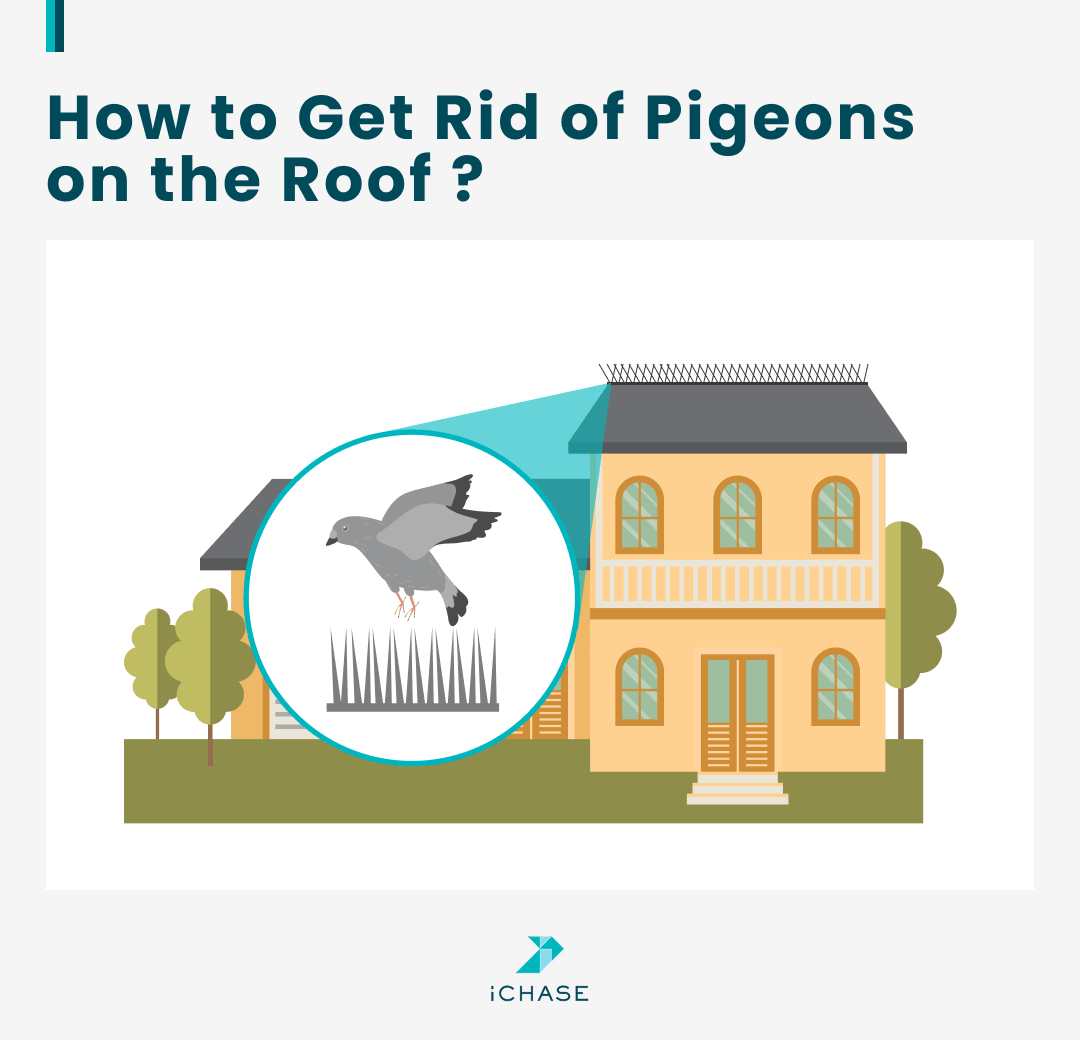
How to get rid of pigeons on the roof?
Install bird spikes or netting to prevent roosting. For larger roofs, consider a laser deterrent or sound device to cover extensive areas and keep pigeons away.
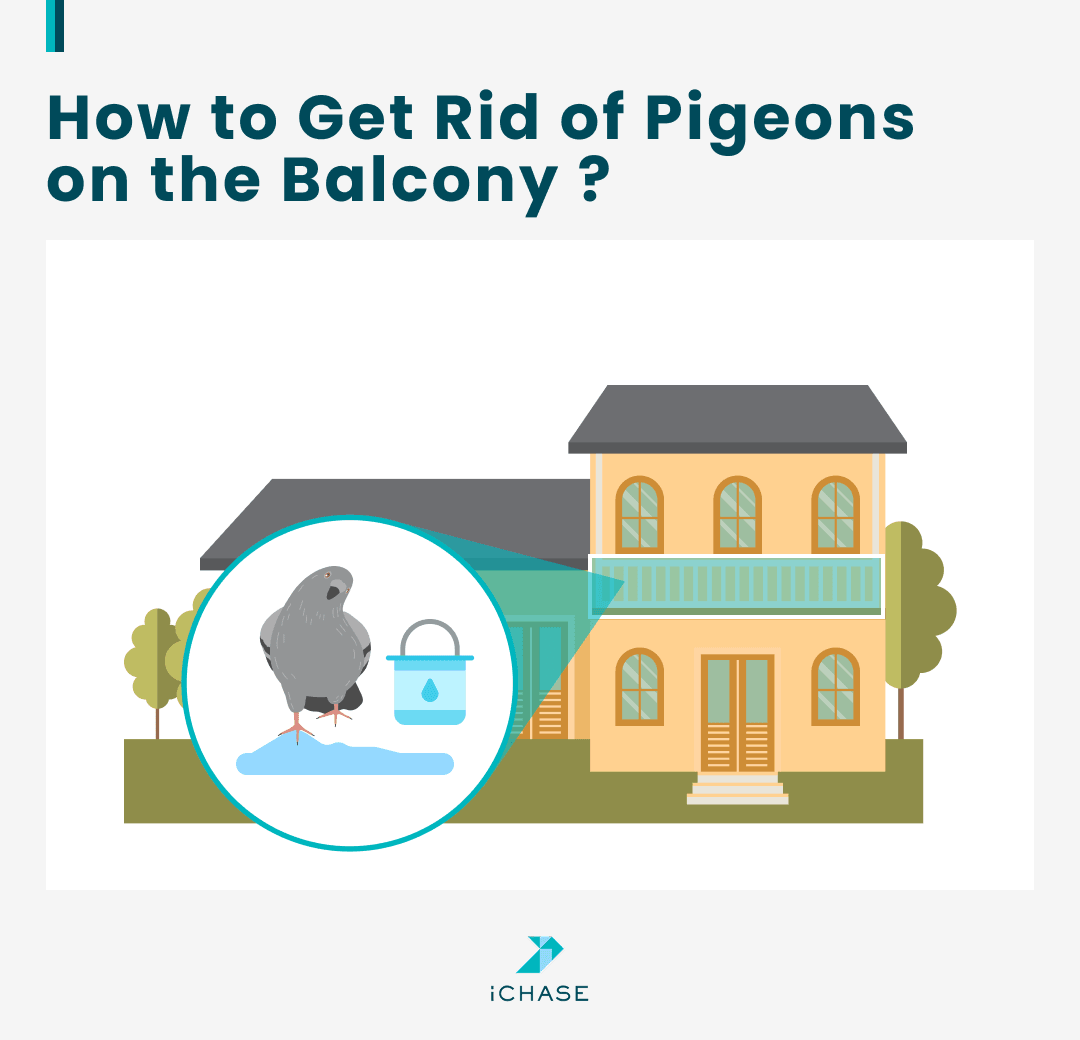
How to get rid of pigeons on the balcony?
Apply bird-proof gel on ledges, set up spikes, or use scent-based repellents to make the area uncomfortable for pigeons and discourage roosting.
How to get rid of pigeons in the warehouse?
Block entry points with mesh, use netting in high areas, and consider laser deterrents for large spaces. Keeping food sources secure and areas clean is also crucial.

Say Goodbye to Pesky Pigeons with iCHASE's Precision Laser Solution!
Pigeon infestations can lead to contamination, property damage, and health risks due to the diseases carried by birds. While various deterrent methods exist, selecting the right one is crucial for large, open spaces like warehouses to ensure lasting results. Among the most effective solutions, laser pigeon deterrents stand out as powerful and reliable tools.
Traditional laser systems often fall short, as pigeons quickly adapt to static patterns, and safety concerns arise when people are nearby. The AI-powered laser system solution iCHASE proudly presents is different—it includes a smart safety mechanism that automatically deactivates the laser when humans enter designated zones, ensuring a safe environment for workers and vehicles.
Proven effective over a year of continuous use, iCHASE’s system remains highly efficient at repelling pigeons, preventing contamination, property damage, and disease spread. Plus, the system can be controlled remotely via laptop or phone, offering ease of integration into daily operations, reducing cleanup costs, and improving biosecurity.Don’t let pigeons wreak havoc on your space. Contact iCHASE now to transform your warehouse into a bird-free zone with the most advanced laser pigeon deterrent solution available. Secure your operations today with the power of precision laser technology!
Read More