
Every year, as temperatures drop across the Northern Hemisphere, a predictable pattern emerges: avian influenza outbreaks surge. It's not a coincidence. It's migration.
From September through March, wild waterfowl travel thousands of miles along established flyways, moving between breeding grounds in the Arctic and wintering sites across North America, Europe, and Asia. Along the way, they carry highly pathogenic avian influenza (HPAI)—often without showing any symptoms themselves.
For farms positioned along these migration routes, fall and winter aren't just seasonal changes. They're periods of elevated biosecurity risk that demand heightened vigilance.
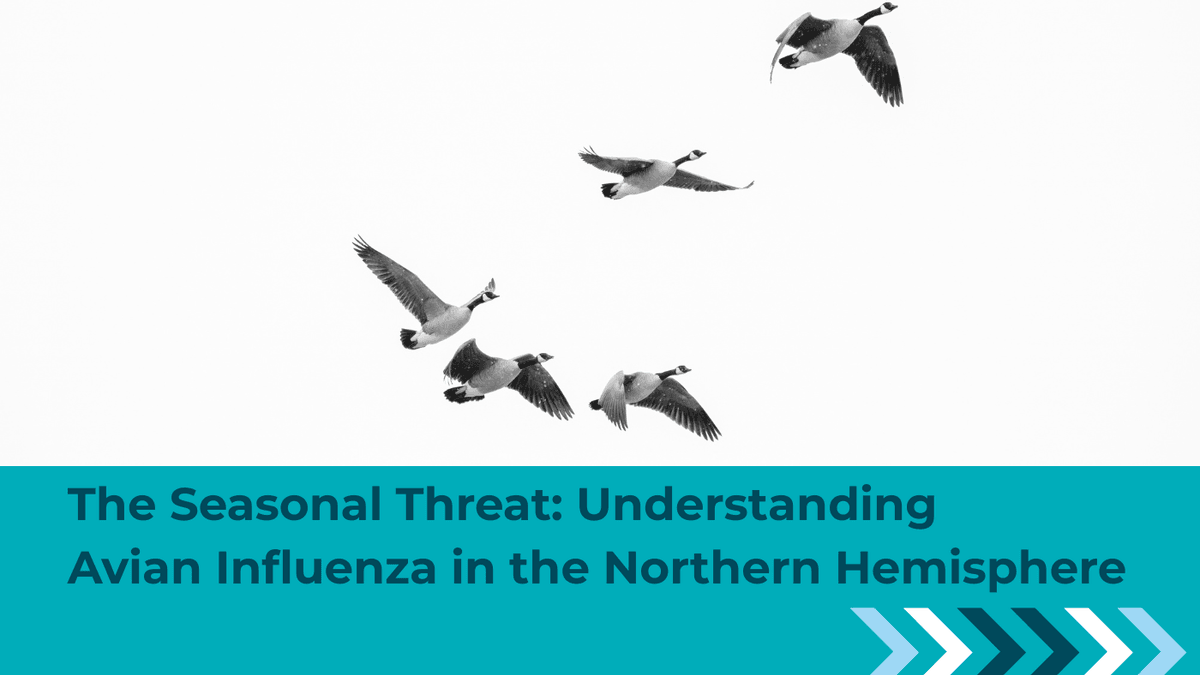
Why Autumn to Spring Marks Peak HPAI Season
Migration Brings the Virus
Wild waterfowl, ducks, geese, and swans, are the primary natural reservoirs of avian influenza viruses. During their annual migrations, these birds congregate in massive numbers at staging areas, wetlands, and agricultural regions.
When infected birds stop to rest and feed near farms, they contaminate water sources, feed storage areas, and surrounding environments through their droppings. A single infected bird shedding virus can expose thousands of domestic poultry or livestock within days.
The numbers tell the story. In autumn 2025, the European Food Safety Authority (EFSA) reported over 2,400 HPAI outbreaks in wild birds during seasonal migration—the highest level recorded in recent years. This wasn't isolated to Europe. Similar patterns emerged across North America and Asia as migratory routes converged on agricultural regions.
Cold Weather Extends Viral Survival
Temperature matters. HPAI viruses survive longer in cold, moist environments. During summer, viruses in bird droppings degrade quickly under heat and UV exposure. In winter, those same viruses can remain infectious for weeks in frozen water or shaded areas.
This means contamination from a single wild bird visit in November could still pose infection risk in January, long after the bird has moved on.
Common Migratory Carriers of HPAI
Not all wild birds carry equal risk. Three waterfowl species are consistently identified as primary HPAI reservoirs during Northern Hemisphere migrations:
1. Mallard Ducks
(Anas platyrhynchos)
The most abundant and widely distributed wild duck species in the Northern Hemisphere. Mallards migrate across North America, Europe, and Asia, often stopping near agricultural areas to feed. Studies consistently show high HPAI prevalence rates in migratory mallard populations, making them one of the most significant transmission vectors.

2. Canada Geese (Branta canadensis)

Large migratory flocks travel between Arctic breeding grounds and southern wintering sites, frequently using agricultural fields and farm ponds as rest stops. Their size, gregarious behavior, and tendency to feed in cultivated areas increase farm exposure risk.
3. Tundra Swans
(Cygnus columbianus)

Long-distance migrants that breed in Arctic tundra and winter across temperate zones. Swans often congregate near wetlands adjacent to agricultural operations, and their movements correlate with HPAI outbreak patterns along major flyways.
Important note: While these three species represent primary carriers, dozens of waterfowl and shorebird species can harbor and transmit HPAI during migration. Any wild bird contact with farm operations during fall-to-spring months should be treated as potential exposure risk.
Beyond Poultry: Cross-Species Transmission is Real
"I Don't Raise Chickens—Am I Safe?"
No. That assumption is dangerously outdated.
While poultry operations face the most direct and severe impact from HPAI, recent years have shattered the myth that avian influenza only affects birds.
Cattle: In 2024-2025, hundreds of U.S. dairy herds tested positive for HPAI, experiencing milk production drops of 20% and cattle mortality rates of 2-5%. The virus jumps from wild birds contaminating feed and water to cattle consuming those contaminated resources.
Swine: Pigs are particularly concerning because they can harbor both avian and mammalian influenza strains simultaneously, potentially creating reassortment opportunities that could produce pandemic strains. HPAI detection in swine has been reported across multiple countries.
Humans: As of early 2026, over 60 human cases have been confirmed in the United States, primarily among farmworkers with direct animal contact. While most cases have been mild, Louisiana reported the nation's first severe case requiring hospitalization. Historically, avian influenza has shown a roughly 50% fatality rate in humans globally—though current strains appear less lethal.
Major agricultural and veterinary media—including WATT Poultry USA, Feedstuffs, and Food Safety News—have extensively documented these cross-species transmission events. This is not a theoretical risk. It's documented reality affecting dairy farms, swine operations, and even wild mammal populations including foxes, seals, and domestic cats.
The message: Any farm with outdoor exposure—regardless of species raised—faces HPAI risk during migration season.
How to Protect Your Operation
HPAI prevention requires layered biosecurity. No single measure provides complete protection, but combined strategies dramatically reduce risk.
1. Strengthen Hygiene Management
Daily sanitation protocols:
- Clean and disinfect equipment, boots, and clothing before entering animal areas
- Establish dedicated footbaths with effective disinfectants at facility entry points
- Remove manure and organic material promptly (viruses survive longer in organic debris)
- Disinfect water sources and feeding equipment regularly
Feed storage protection:
- Cover all feed storage areas to prevent wild bird access
- Elevate feed bins off the ground
- Clean up spilled feed immediately—don't leave overnight
- Inspect storage areas daily for signs of wild bird intrusion
2. Enhance Biosecurity Protocols
Access control:
- Limit farm visitors during peak migration months
- Require all personnel to change clothing/boots before entering animal areas
- Implement vehicle disinfection for any trucks entering the property
- Keep detailed logs of all farm entries (people, vehicles, equipment)
Wildlife barriers:
- Install netting over outdoor feeding areas where feasible
- Eliminate standing water sources that attract wild birds
- Remove trees or structures near barns that provide wild bird roosting sites
- Keep vegetation trimmed to reduce shelter for pest birds
3. Implement Active Bird Deterrence
The most effective biosecurity measure you can control is reducing wild bird presence time on your property.
Every minute a wild waterfowl spends near your feed storage, water sources, or animal housing is an opportunity for viral transmission. The goal isn't necessarily to eliminate all wild bird visits—that's unrealistic. The goal is to make your facility unattractive enough that birds don't linger.
Traditional deterrence limitations:
- Noise makers: Effective for 2-3 weeks before habituation
- Visual deterrents: Birds learn to ignore static threats quickly
- Physical barriers: Expensive and impractical for large outdoor areas
AI-powered bird deterrence advantages:
Modern AI bird repeller systems use computer vision to detect wild bird activity in real-time and deploy adaptive laser deterrents that prevent habituation. Unlike predictable methods, AI systems vary response patterns continuously—birds can't learn to ignore them.
- 24/7 monitoring during critical migration periods (no gaps in coverage)
- Immediate response when high-risk waterfowl approach sensitive areas
- Data tracking shows exactly when and where wild birds attempt to access your property
- Adaptive patterns maintain effectiveness throughout the entire fall-to-spring season
By reducing wild bird dwell time from hours to minutes—or preventing landings entirely—AI deterrence creates a measurable reduction in viral exposure risk.
Personal Safety Matters Too
Farm biosecurity isn't just about protecting animals. It's about protecting people.
If you work on or visit farms during HPAI season:
- Avoid contact with wild birds (dead or alive) and their droppings
- Follow local health authority guidance on protective equipment
- Do not consume raw or undercooked poultry/eggs from unknown sources
- Wash hands thoroughly after any farm work, especially before eating
- Disinfect clothing and boots after farm visits
- Report sick or dead wild birds to local wildlife or agricultural authorities
- Seek medical attention if you develop flu-like symptoms after farm exposure
Health departments across North America and Europe have issued specific guidance for agricultural workers during HPAI outbreaks. Follow those recommendations. They're based on real transmission cases, not theoretical concerns.

The Bottom Line: Prevention is Seasonal
HPAI doesn't spread evenly throughout the year. It follows migratory patterns as predictably as the seasons themselves.
Fall through spring = elevated risk
Summer = reduced risk (though not zero)
Effective farm management means adjusting biosecurity intensity to match seasonal threat levels. That doesn't mean ignoring bird control in summer—resident pest birds still cause feed loss and contamination year-round. But it does mean ramping up vigilance dramatically once migration begins.
The farms that avoid outbreaks aren't lucky. They're prepared. They understand seasonal risk patterns, implement layered biosecurity, and treat wild bird deterrence as essential infrastructure—not an optional add-on.
Ready to Strengthen Your Defenses?
If you're uncertain about your current wild bird exposure risk, unsure which deterrence strategies fit your operation, or want professional assessment of your biosecurity gaps, we're here to help.
iCHASE provides comprehensive site evaluations and AI-powered bird deterrence systems designed specifically for agricultural biosecurity during HPAI season.
Migration season is here. The risk is real. The tools exist.
The question is: will you wait for an outbreak, or prevent one?